The COVID-19 pandemic brought with it, its own issues of what is widely regarded as “infodemic”. According to the World Health Organisation (WHO), infodemic refers to “too much information, including false or misleading information in digital and physical environments during a disease outbreak.” The infodemic causes confusion, leads to risk taking behaviours that can harm health and leads to mistrust in health authorities. It further intensifies or prolongs the disease outbreaks since people become unsure about what precautions they need to take to protect their health and the health of others around them. With the emergence and expansion of social media and internet use, it is even more dangerous as information spreads more rapidly (WHO, n.d). This means that harmful false information can be spread faster. This article conducts empirical review of studies related to infodemic, misinformation and people’s behaviours and perceptions towards COVID-19 misinformation.
Conceptualisations
Ahmed and Eldakar (2021) explored Egyptian Facebook user’s perceptions and behaviour of COVID-19 misinformation. They identified and categorized misinformation shared in the Arabic language on Egyptian social media pages and surveyed Facebook user’s perceptions and behaviours. In particular, the study explored how Egyptians engage with information shared on social media that is related to the COVID-19 outbreak, why they share this information, how demographic characteristics (gender and level of education) impact participants’ information sharing and perception, and their ability to distinguish credible information from misinformation (p. 2). The study was conducted using a mixed method approach.
The findings revealed four kinds of misinformation on Egyptian social media, namely; false claims about the virus or treatment of the virus, false information about the government, false or manipulated content in general, and conspiracy theories. In addition, the spread of COVID-19 misinformation was found to have caused negative feelings among participants. Also, the reasons identified for sharing COVID-19 information were: to reduce boredom; to learn useful information; to get other people’s opinions about the information. Other reasons identified include: to keep in touch with friends; to show the sharer is interested in reading COVID-19 posts on social media; a good way to kill time; to know the latest updates; it makes the sharer feel like he/she affect others; it gives a feeling of joy; and it help in interacting with others. Regarding their ability to distinguish credible information from misinformation, it was found that respondents indicated that: they always make sure the information is correct before they share it; they follow the information published by government institutions such as the Ministry of Health; they search for the same information on other sites to verify it; they join social media groups that highlight false news; and some indicated that they cannot distinguish between correct and incorrect information due to the high number of studies and information about Coronavirus.
Feelings about misinformation sharing on social media include: anger when some people share false information about the seriousness of the virus and methods of treatment; happiness when they made sure that information about the severity of the virus is not correct; worry when they read wrong information about the severity of the virus; uncertainty about wrong information about the Coronavirus; and pride after making sure that the information about the Coronavirus is not correct.
The findings show that gender and educational level of respondents affected the way they dealt with and accepted misinformation. The higher education group had a higher mean score than the lower education group. Regarding gender, the findings suggest a difference in the validity and credibility of information regarding COVID-19 on social media.
The authora recommended that Egyptian health authorities and NGOs in the health sector should adopt the results of the study to be able to identify countermeasures of misinformation.
Combating Digital Disinformation
In a study on strategies for combating the scourge of digital disinformation, Randolph H. Pherson, Penelope Mort Ranta & Casey Cannon (2021) note that political actors and social manipulators were increasingly using social media platforms to reshape popular perceptions for partisan political or social purposes. They observed that, according to Freedom House disinformation tactics were used in at least seventeen countries in 2017, mostly to sway opinion within their own borders, especially in Venezuela, Turkey, and the Philippines. Also, The Guardian in the United Kingdom in November 2017 reported that governments of 30 countries were “using armies of opinion shapers to meddle in elections, advance anti-democratic agendas, and repress their citizens. The objective of the study was to demonstrate how diagnostic techniques developed in the Intelligence Community (IC) could be used to identify the most promising approaches for combating the scourge of digital disinformation and counteract the damage inflicted on democratic institutions. The four distinct strategies for combating digital disinformation are using third-party fact checkers to issue warnings of questionable postings; creating a second, alternative and fact-based Internet; establishing strict global screening protocols; and forming “safe spaces” of validated information in the cloud. They assert that efforts to forge a successful, intelligence-informed antidote to digital disinformation must be multifaceted.
With the first strategy, they state that the government requires major commercial search engines and social media to display warning notices when a user enters a website or views a post that is deemed to be of questionable veracity. These posts could be identified using an army of fact-checkers and Artificial Intelligence (AI) algorithms. They would be categorised as either legitimate, biased, satire, or purposeful deception. This categorisation could be defined in a legislation, which would be as a result of a robust collaborative fact-finding and debate involving both government and private sector players. These warnings they refer to as Pinocchio Warnings.
Regarding the second strategy, the government would create an alternative internet where users are banned from posting digital misinformation. There would be a precertification when users are joining the network and they must also agree to abide by a set of universal standards for exchanging information and insights. Violators of the rules of the network would be banned from accessing the network for life. The platform is termed the Alt-Net.
The third strategy, the Rigid Gateways, refers to AI and human based screening procedures developed by online service providers, to ensure that only acceptable content will be posted on their platforms or websites. The online platforms jointly develop AI screening algorithms for policing their systems and hire an army of analysts and programmers to implement a blended strategy for collaboratively reviewing content.
The final strategy involves the call for leading online service providers to create a safe space or cloud on the internet that houses only validated information from trusted sources. Postings on the cloud would be pre-certified as compliant with international standards for evidence-based analysis and opinion. Anyone or institution could apply to be certified to be able to post on the cloud, which would be called T-Cloud. Standards for posting could include a determination that the information comes from a trusted source; meets academic standards, including peer review; it is deemed acceptable by applying AI algorithms or human review processes. There will be a small charge for the right to post individual papers, books, videos or other media in the cloud.
They note that the viability of the strategies would be dependent on the role of technology, the strength of financial, social and political incentives and obstacles imposed by financial, social and political factors.
Despite the fact that these strategies are laudable, the implementation process would involve a human interface which could affect the objectiveness of the strategies. It also appears that a lot of power is in the hands of governments and their agencies which could make them take advantage of the platforms to perpetrate their own partisan political agenda.
The WHO, mindful of the implications of misinformation on the COVID-19, issues a joint statement with the UN, UNICEF, UNDP, UNESCO, UNAIDS, ITU, UN Global Pulse, IFRC on managing the COVID-19 infodemic aimed at promoting healthy behaviours and mitigating the harm from misinformation and disinformation.
The statement noted that even though technology and social media were being used to keep people safe, informed, productive and connected during the pandemic, they were also being used to amplify information which was continuing to undermine the global response and jeopardise measures to control the pandemic. In a bid to combat the misinformation, WHO member states passed Resolution WHA73.1 on the COVID-19 response at the World Health Assembly in May, 2020.
The Resolution appealed to WHO member states to provide reliable COVID-19 content, and leverage digital technologies across the response. It further called on “international organisations to address mis- and disinformation in the digital sphere, work to prevent harmful cyber activities undermining the health response and support the provision of science-based data to the public” (WHO, 2020).
The other demands of the statement include:
Call on Member States to develop and implement action plans to manage the infodemic by promoting the timely dissemination of accurate information, based on science and evidence, to all communities, and in particular high-risk groups; and preventing the spread, and combating, mis- and disinformation while respecting freedom of expression (WHO, 2020).
Urging Member States to engage and listen to their communities as they develop their national action plans, and to empower communities to develop solutions and resilience against mis- and disinformation (WHO, 2020).
Call on all other stakeholders – including the media and social media platforms through which mis- and disinformation are disseminated, researchers and technologists who can design and build effective strategies and tools to respond to the infodemic, civil society leaders and influencers – to collaborate with the UN system, with Member States and with each other, and to further strengthen their actions to disseminate accurate information and prevent the spread of mis- and disinformation (WHO, 2020).
It is indicative from the WHO Resolution and the call on member states to address issues of mis and disinformation that information disorder is of great concern in all aspects of our lives and that all must make efforts to contribute to the global fight against the menace.
REFERENCES
Ahmed Shehata & Metwaly Eldakar (2021): An Exploration of Egyptian Facebook Users’ Perceptions and Behavior of COVID-19 Misinformation, Science & Technology Libraries, DOI: 10.1080/0194262X.2021.1925203
Randolph H. Pherson, Penelope Mort Ranta & Casey Cannon (2021) Strategies for Combating the Scourge of Digital Disinformation, International Journal of Intelligence and CounterIntelligence, 34:2, 316-341, DOI: 10.1080/08850607.2020.1789425
Information disorder is a growing concern in the global information ecosystem. Advances in technologies have liberalised information access and dissemination, enabling anyone with relevant communication facilities to publish varied forms of communication contents to a global audience. Hence, information dissemination to mass and diverse audiences is no longer the exclusive preserve of conventional mass media which have the supportive framework to check information accuracy in an often rigorous editorial process. A major shortcoming of this liberalisation of communication space is the increasing free flow of false information in the public space. This has given rise to fact-checking efforts in an attempt to stem the flow of false information through painstaking verification of public claims, with expectation of greater vigilance among media audiences.
In this study, we examine public awareness of misinformation in the media and the potential impact of fact-checking organisations in combating spread of misinformation. To this end, we developed four key research objectives focusing on the level of audience awareness of misinformation in the public space; their trust in the media; tendencies to verify media information; and perceived influence of fact-checking efforts in the West African sub-region. We adopted the online survey research method using a google form designed questionnaire shared among potential respondents. We adopted a non-probability sampling method to invite potential respondents from Nigeria, Ghana, and Sierra Leone to fill. A total of 508 respondents participated in the survey and the data generated were analysed quantitatively and qualitatively.
The study finds that respondents rely more on online news portals for information with many experiencing false information in varied forms on their preferred platforms; while rating Facebook and WhatsApp as leading platforms for promotion of false information. Respondents generally reported a high tendency in verifying information. Despite the majority experiencing false information on their preferred media platforms, many still trusted their choice media and the information therein. About 95% claimed they often verify information which they received on social media but less than half agreed to verifying information from social media platforms that have previously misled them. Respondents thus rated social media platforms, blogs, and online news portals, low in trust compared to traditional media. Awareness of fact-checking organisations and utilisation of their services was low among respondents but there was high appreciation of fact-checking activities.
Respondents’ level of trust in mainstream media and fact-checking organisations is encouraging. These are alternative verification platforms that should be equipped and strengthened by stakeholders, including donors, governments, fact-checking organisations and technology companies to help sanitise the public space from information pollution. Although this study notes the positive influence of fact-checking organisations on the ability of the media audience to cope with misinformation, fact-checkers must work harder to improve on this feat.
To download a PDF version of this report, CLICK HERE
Introduction
Communication is central to the survival of human beings and other living organisms in the world and it has played a vital role in human civilisation. Turcilo & Obrenovic (2020) observed that the challenges and manipulative use of communication had also plunged nations into wars. This made communication a catalyst to human existence, illustrated by the popular saying that “man cannot not communicate”. It is with the realisation of this that the society ties development to communication. Extensive research (e.g: Encyclopedia, 2020; Bro, 2013; Neuberger, Nuernbergk & Langenoh, 2019; Örebro, 2002; Stroobant, Van den Bogaert & Raeymaeckers, 2019) has been conducted to establish the connection between communication and other components of the society. The society places a premium on communication in the socialisation process, making all stakeholders to integrate this to the attainment of the mission and vision of organisations around the world. Individuals, family, groups, local, national and international institutions consider information as an integral part of their existence. These stakeholders have invested in efforts to understand the information ecosystem in order to maximise its benefits and prevent challenges that always result from inadequate or poor communication.
The constant evolution of society and its attendant technological advancement have become a recurring decimal. The disruptive nature of digital technology has further exposed the latent power of communication and its adoption for positive and negative purposes. In an attempt to control human minds to achieve specific objectives, the manipulation of information flow has now become the order of the day (Abubakar, 2015). Information pollution has permeated governance, politics, economy, religion, education, health and other sectors of the society.
Contemporary issues around the world today are often accompanied by conspiracy theories. For instance, the Covid-19 pandemic and the US 2020 presidential election were tainted with disinformation and misinformation (Adeniran, 2020a; Adeniran, 2020b; Mantas, 2020). Africa, with its peculiar development challenges, has its fair share of issues of information pollution. Many issues in Africa with great impact on the respective countries have been linked to information disorder. Challenges relating to elections, economy, health, governance and other sectors in the continent are difficult to address owing to the state of confusion arising from the avalanche of disinformation and misinformation about these phenomena. (Folarin, 2020; Masters, 2020; Pauwels, 2020; Claire & Hossein, 2017)
Just as many African countries are ravaged by wars and diseases, with the proliferation of arms, information pollution in the continent can be likened to experience with “Weapon of Mass Destruction” and Covid-19 pandemic (Masters, 2020; van der Linden, Roozenbeek & Compton 2020; Teyit English & Tandans Data Science Consulting, 2020 Towers-Clark, 2019; Ireton & Posetti 2018). The widespread disinformation and misinformation cutting across all barriers and without borders has popularised the concept of Infodemic. The World Health Organisation (2020) explained the concept as “an overabundance of information – some accurate and some not – that makes it hard for people to find trustworthy sources and reliable guidance when they need it.”
As the world continues to search for vaccines and potent drugs to prevent and treat Covid-19 disease (Ricard & Thibault, 2020; Saey 2020), stakeholders are also searching for solution on how disinformation and misinformation will not frustrate any success that will be recorded in this respect, as experienced in the outbreak, spread, and management of the novel coronavirus (Teyit English & Tandans Data Science Consulting). This scenario applies to all other aspects of engagements in the society.
Several studies have investigated information disorder around the world. Among these is one by Tayit, an independent fact-checking organisation in Turkey, in conjunction with Tandans Data Science Consulting. The study (Tayit & Tandans, 2020) provides insights into issues around false information. Though Tayit’s study focused on Covid-19 misinformation and potential impact on the information ecosystem in Turkey, it provides the perspectives and clues to interrogate the broader information disorder ecosystem in the African context. Improving media literacy is fast becoming the go-to antidote for combating the pollution within the information ecosystem.
As part of its efforts in improving media literacy to combat the challenges of disinformation and misinformation in the information ecosystem, Dubawa, an indigineous fact-checking organisation, instituted a research-driven project, the Information Disorder Analysis Centre (IDAC) aimed at providing a platform for the dissemination of research findings that dissect issues around information disorder. For six months, the 2020 Dubawa fact-checking research fellows examined issues around the information disorder ecosystem in West Africa.
In furtherance of the fellowship programme, the 2020 Dubawa research fellows embarked on this research project to understand public understanding of misinformation in the public space, and the relevance and utilisation of fact-checking services in combating misinformation. The research fellows were drawn from Nigeria, Ghana and Sierra Leone.
Research Objectives
The study thus sought to understand the West African information ecosystem through the following key objectives that guided the study.
To find out the respondents’ level of awareness on misinformation in public space.
To examine the extent to which audiences verify information from the media in West Africa.
To examine the level to which respondents trust the media.
To assess the perceived influence of fact-checking on audience ability to cope with misinformation.
Method
This study adopts quantitative and qualitative research methods using online surveys with a Google form designed questionnaire shared among potential respondents. The desirability of this approach is underscored by its ability to elicit data from a large number of respondents in an era of social distancing as necessitated by the ravaging COVID-19 pandemic.
This research study targeted smart-phone users in West-African countries where Dubawa currently operates – Nigeria, Ghana and Sierra-Leone. We limited potential participants to smartphone users within the region due to the adoption of the online survey method. The rationale was to reach respondents through smartphones considered to be the most effective means to share the questionnaire, thus limiting physical contacts.
The questionnaire included open and closed-ended questions. The questionnaire link was widely shared online, via e-mails, social media platforms such as Facebook, Twitter, Instagram as well as personal WhatsApp contacts and groups. Respondents were invited to click on the link and fill the questionnaire. Participation was voluntary and responses were accepted over a 4-week period from Monday, November 9 to Sunday, December 6, 2020. Over this period, we shared the link repeatedly across the online platforms used. Participation was however low with a total of 508 respondents filling the questionnaire across the three West African countries and beyond.
The data were extracted to a google spreadsheet and exported to Microsoft Excel Sheet and analysed quantitatively and qualitatively. The responses were sorted to separate responses to the close-ended questions from the open-ended questions. Data from the close-ended questions were subsequently analysed using frequency tables and charts. Meanwhile, the open-ended questions, where respondents freely expressed their opinions to specific questions were qualitatively analysed with findings integrated into the discussion section .
The bulk of the 508 respondents that filled the questionnaire were based in Nigeria. Out of these, 87% (n=446) responded from Nigeria, 7% responded from Sierra Leone (n=30), while respondents from Ghana accounted for 5% (n=25), and Diaspora 1% (n=7). Incidentally, the respondents rate is close to the percentage of the population census of the three countries. The approximation of the entire population of the three countries, according to Worldometer, is 247 million with Nigeria accounting for 208 million which represents 84% of the entire population of the three West African countries. This supports the 87% of the respondents coming from Nigeria.
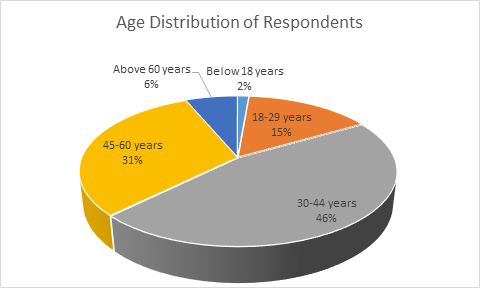
In terms of age and gender, respondents were mostly between 18 and 45 years old. While more younger women aged 29 years and below responded to the survey, more men aged 30 to 45 years responded. By level of education, respondents were highly educated with the majority of them having post-secondary qualifications. The demographic data of respondents are presented in the charts below.
Study Limitations
This study is limited mostly by its adopted method. The adoption of online surveys, non-probability sampling of respondents, and restriction of respondents to smartphone users in the region are key limitations of this study. The online survey was adopted due to the ravaging COVID-19 pandemic to eliminate face to face contacts with respondents. Unfortunately, we could only share the questionnaire among personal contacts and groups on WhatsApp, and other social media platforms. The questionnaire was also repeatedly shared on Dubawa’s social media platforms. Despite repeated efforts in sharing the questionnaire links with thousands of smart-phone users, responses were low, struggling to hit just over 500 respondents after 4 weeks. Those without smartphone access were therefore strategically excluded from the study. This is a major shortcoming considering the sizable number of people without smartphone access in the West African sub-region. These limitations may therefore limit the generalisation of our findings. Despite these limitations, it is hoped that our findings can at least provide a glimpse into public understanding of misinformation in the public space and appreciation of fact-checking efforts. We hereby recommend a more robust study covering all major segments, and reflective of the socio-economic dynamics of the people within the region for future research endeavours.
Results
Level of awareness on misinformation in public space
In this study, we examined public awareness of misinformation in the public space. To achieve this, we asked respondents specific questions relating to their choice of media for news information; whether they encounter false information on such medium; and specific forms of presentation of false information in their preferred media. We then asked them to rate their perceived level of false information on varied media platforms spanning radio, television, newspaper, Facebook, Twitter, WhatsApp, Instagram, and online news portals. They were requested to rate the platforms on a scale of one to four with four being highest, three as moderate, two as low, and one, being lowest.
Our findings suggest increasing reliance on online news portals for news-related information. One in three respondents (33%) identified online news portals as their prime source of news information. The increasing internet penetration in West Africa (Varrella, 2020) might be driving such a shift in news consumption. Unfortunately, these preferred media choices appear rife with false information with about three in four respondents (72%) confirming presence of false information on such platforms. The false information is often presented in different formats including audio, videos, images, and text. More than six out of ten respondents (64%) confirmed experiencing false information on their preferred media choice in all listed forms.
Facebook, WhatsApp rated as top Platforms for Promotion of False Information
Respondents mostly rated Facebook and WhatsApp as having the highest level of misinformation. Both platforms had an overall rated average of 3.5 on our rated scale of one to four. Online news portals, Twitter, and Instagram had overall moderate average rating recording approximate mean value of 3.0. Traditional news media, newspapers, radio and television were relatively well rated recording overall low rating of 2.0 thus suggesting members of the public still have higher level of confidence in information received from these traditional news media.
We further requested respondents’ view on the seeming abundance of false information in the public space. Many respondents confirmed abundance of false information in the public space relating misinformation (fake news) to “a pandemic” “on the loose” “thriving than real news” as it is reportedly “responsible for lack of trust in the media”, killing “the credibility of the news gathering process”, and with potential to “kill faster than guns”. Many believed that misinformation is not just “a threat to world’s security and democracy” but also “a recipe for unrest…associated with the post-truth age”. Respondents considered factors responsible for misinformation spread to include “lack of professionalism in the mainstream media”, “public’s docility, ignorance and complacency”. Many believed “Social media are more responsible” for promoting misinformation. Respondents thus suggested possible solutions to misinformation menace noting that while “media literacy is essential, social media needs to be regulated without hampering freedom of expression”and “the government needs to do more on fact-checking”.
Extent to which audiences verify information from the media
On verification of information in the media, we asked respondents specific questions on the extent to which they verify information they encounter in the media and how they usually identify false information. We also asked specific questions on whether they have cause to doubt information on social media. We requested them to strongly agree, agree, or otherwise to verify information they encounter on social media, and whether they tend to verify information on social media handles that have previously misled them.
Respondents expressed higher likelihood of verifying information in the media. More than nine in ten respondents confirmed regularly or sometimes verifying information they encounter. The remaining rarely or never did.
To identify false information, majority of respondents, more than eight in ten, (84%) said they often cross checked with other sources. Another 10%, or one in ten respondents said they simply base their judgement on their instincts. Few said they do not bother while others simply considered information in contrast to their beliefs to be fake. Three respondents each expressed variant views. One noted relying on eye-witness accounts, “From comments of everyday people who witnessed the said event”. Another noted her realisation often after exploring the content, “When you open the information e.g. job opportunity you will realise that it has expired”. The third noted evaluating the information source, “Checking the publisher or author of the information”.
Regarding information on social media, 95% of respondents confirmed doubting information they encountered on social media platforms. Three in four respondents (75%) agreed they verify information they come across on social media. Over 10% disagreed, while more than 14 percent were undecided.
Less than half of respondents (44%) agreed to only verifying information from social media platforms that have previously misled them. Over 30 percent of respondents, or about one in three, disagreed on this while one in four respondents (25%) were undecided.
Public Trust in the Media
On the level of public trust in the media, we examined the extent to which members of the public trust their preferred media, and also the information they receive therefrom. Respondents were asked to rate their trust level on a scale of five to one with five being ‘very high’, four as ‘high’, three as ‘average’, two as ‘low’, and one being ‘very low’. We then asked respondents to equally rate their trustworthiness of information on the same scale across various media covering radio, television, newspapers, Facebook, Twitter, Instagram, WhatsApp, online news portals and blogs.
Respondents appeared to have fair confidence in their choice media and the information they receive from their respective preferred media. Both recorded a relatively high overall average score of 3.7 on our scale of one to five. As earlier observed with respondents’ low rating of false information in the traditional mass media, respondents also fairly rated information they receive on these media. Radio, television, and newspapers recorded a well above average score of 3.7 to 3.9 on respondents’ trust ratings of their disseminated information. Information on Twitter, online news portals, and blogs received overall lesser than average ratings of 2.7 to 2.9. Information on blogs, Facebook, and WhatsApp got a rather low rating of 2.3 to 2.4.
Respondents’ trust ratings of information in the media on a scale of 1-5 (Very High as 5 to Very low as 1)
Information source
V. High (5)
High (4)
Average (3)
Low (2)
V.Low (1)
Total Resp.
Mean Score
Overall Rating
Information on Television?
11
278
102
105
5
501
3.9
High
Information on Radio?
12
260
146
75
5
498
3.8
High
Medium form which respondents mostly source information
82
200
201
16
4
503
3.7
High
Information respondents source from their preferred medium/media?
9
221
182
84
3
499
3.7
High
Information on Newspapers?
24
221
165
87
4
501
3.7
High
Information on Twitter?
128
89
209
25
41
492
2.9
Average
Information on online news portals?
83
95
269
15
35
497
2.9
Average
Information on Instagram?
142
55
229
11
47
484
2.7
Average
Information on blogs?
164
44
196
4
80
488
2.4
Low
Information on Facebook?
202
19
176
8
96
501
2.3
Low
Information on WhatsApp?
180
26
167
9
116
498
2.3
Low
Assessing Potential Influence of Fact-Checking
To examine potential influence of fact-checking organisations and their activities, we examined the level of awareness of fact-checking organisations among respondents. We requested to know whether they usually request fact-checking organisations to verify information they are doubtful of, and how often they do. We also examined their reliance on fact-checking organisations for false information in the media, and requested them to rate the extent to which these organisations have helped in improving our information ecosystem.
More than half of respondents were unaware of any fact-checking organisation. Over 70% (73%) of respondents failed to identify any fact-checking organisation. Dubawa was the most recalled organisation among respondents with about 16% mentioning the organisation. Africa Check had 9% mention while People’s Check had just 4%/ other fact-checking organisations or projects mentioned by respondents included Facebook fact checker, Fact Check Nigeria, FactCheck.org, Round Check, Fact Check Hub, and AFP Fact Check.
On requesting verification from fact-checking organisations, about six in ten respondents (58%) said they did not while four in 10 respondents (42%) said they did. Respondents also expressed less tendency to verify information (they are doubtful of) from fact-checking organisations. A similar percentage of respondents, (57%) said they never or rarely did.
More than half of respondents however confirmed being aware of false information in the media through these fact-checking platforms even though a large percentage (about 40%) were also undecided. Respondents mostly appreciated fact-checking efforts with about seven in ten respondents noting fact-checking has ‘fairly’ or ‘very well’ helped clarify information in the public space. Most respondents, more than six in ten, agreed to have personally benefited from activities of fact-checking organisations.
Discussions
The findings of this study have provided key roadmaps to the elucidation of the broad aim of the study, which is to investigate the information ecosystem in West Africa through the prism of fact-checking in the era of infodemic.
On the level of awareness of misinformation in the public space, participants’ array of definitional approaches to the term “fake news” explains their appreciable level of awareness of information disorder across board. The underpinning themes derived from their responses revolve around the usual narrative that is common to most news audiences. To a larger percentage of the respondents, the term can simply be explained as: unverified information, with a tendency to mislead; information that is untrue, misleading and factually incorrect; or as information that is “manipulated”, “fabricated” or, at best, “false information presented as true”.
The fact that an average respondent made a reference to any of the terms which even experts dealing with information disorder will most likely agree to, shows that their level of awareness and ability to spot fake contents is moderately high. The statistics of respondents (72%) confirming the presence of false information on their preferred media platforms also shows a growing level of awareness of infodemic in the region. This position is in tandem with a report on fake news and disinformation by the independent High-Level Group of Experts (HLEG) commissioned by the European Commission which defines “fake news” as a form of disinformation that thrives on “fabricated information, blended with facts, and practices that go well beyond anything resembling ‘news’ to include some forms of automated accounts used for astroturfing, networks of fake followers, fabricated or manipulated videos, targeted advertising, organized trolling, visual memes’’ (European Union, 2018, p.11; cited in Okoro & Emmanuel, 2019).
Apparently, this growing awareness of information disorder, particularly on social media might have influenced respondents’ doubting of information received on the platform. As reported in this study, while 75% of respondents verified information they received on social media, 95% of them confirmed doubting information on social media platforms. This finding supports a 2013 survey of online news users in the UK which showed that, on average, 25% used social media to find news at least once a week, but that less than 10% trusted that information (Schifferes, et al., 2014).
Reports have fingered social media as an enabler of information disorder in the public space (Ziga, 2018). This apparently influenced the reasons most respondents (95%) claim that they had cause to doubt information on the social media platforms. With diverse but mostly-related opinions, respondents claim that most information shared on social media platforms were influenced by mere instincts, highly polluted and prone to manipulations. For those who have been victims of false contents online, the tendencies are that they become highly sceptical than those who are not, as about “44% agreed that they verify information they received on social media platforms that have previously misled them”.
The growing awareness of the respondents about misinformation is indicative of the ability to move from mere instincts to a more cognitive and critical thinking in their levels of information consumption particularly on social media. This suggests that despite the indispensability of social media platforms, their propensity for being critical of any information is advancing. What factors specifically influence audience propensity for cognitive thinking faculty in their exposure to misinformation? Pennycook, Cheyne, Koehler, and Fugelsang (2015) explained the psychological motive behind these tendencies, using the Cognitive Reflection Test (CRT).
The Cognitive Reflection Test (CRT) measures one’s propensity to reflect on intuitions or cognitiveness. In their study, Pennycook et al (2015) observed that news audiences can be controlled by instinct (intuition) or cognitively. While the former most time stick to their instincts even when confronted with false information, the latter deploy cognitive thinking faculty to reflect and be sceptical when exposed to false content online.
Pennycook et al (2015) observed that intuitive individuals may or may not detect the need to think analytically, but they decide nonetheless to go with their gut.
Robson (2020) reacted to this theory and observed that, someone’s tendency to employ their intelligence by thinking things through in a deliberative, analytical fashion is ruled by cognitiveness. Those who do not reflect when confronted with a piece of information are not necessarily bereft of effortful thinking capacity as they are obviously in possession of substantial mental reserves, but they don’t “spend” them. They are simply cognitively miserly. Cognitive miserliness renders us susceptible to many cognitive biases, and it also seems to change the way we consume information (and misinformation).
The finding of this study concerning public trust in the media also corroborates existing literature as the respondents’ low rating of false information in the traditional mass media suggests a sustained level of trust in the mainstream media. Even, the fairly rated information they receive on the mainstream media corroborates an existing study which finds that more than a quarter of respondents trusted newspapers and broadcast media more than social media (Raji, 2020b). Hence, there is more indication that a significant number of the news audiences still maintain their trust in the established news brands rather than social media.
However, the legitimacy and credibility of information in the mainstream media is currently being challenged by the proliferation of fake contents that found their ways into the established news media. This has become a challenge in recent times to news audiences whose yearning for alternative sources of credible information and verification has gained traction with independent fact-checkers who realise there have been cracks. This is the gap fact-checking journalism aims to fill. Cheruiyot, et al, (2018) aver that in an environment where misinformation threatens news organisations, “the process of fact-checking in itself has become an epistemological tool that several actors beyond traditional journalism propose”. Annamarie (2017) also agreed that “fact-checking organisations arise from the need to remedy media failures”. What is the influence of fact-checking organisations on news audiences in West Africa? What has been their influence on the audience ability to cope with misinformation? Are citizens aware of fact-checking organisations in West Africa? What is the rate at which citizens request fact-checking organisations to verify information they are doubtful of, and how often do they engage in this?
The thematic areas gaining attention from the data analysed can be discussed from the angle of nomenclature, utility and request.
From the angle of nomenclature, which is the system of names, data shows most respondents (73%) were unable to identify existing fact-checking organisations in West Africa. This then calls to question the relationship that exists between the organisations and the news audience. The danger then shows that the goals of the existing fact-checking organisations to raise the consciousness of an audience to make informed decisions are still a far cry. The impact of these organisations can only be felt provided the essence of their professional goals resonates with the audience. Cheruiyot et al, (2018) reported that there are two ways fact-checkers aim to achieve their goals: one is to help members of the public to make informed decisions or “to have accurate data based on factual evidence and then the second is to help raise the standard of journalism or to help journalists be better at fact checking and doing their jobs”. The reality of these goals to be impactful on the audience is a function of relationship and the ability to recall the identity of the organisations that are making these commitments.
At the level of utility, evidence shows that the audience have benefited from the activities of these organisations, regardless of whether or not they could recall their names. As the finding indicates, more than half of respondents confirmed being aware of false information in the media through these fact-checking platforms. Could this be attributed to the collaboration between news media and fact-checking organisations that created a synergy in which fact-checks are embedded in the news reports for the audience to consume? Also, in many instances, audiences get exposed to these fact-checks on the organisations’ website or social media handles. However, this study did not examine if this awareness of false information translates into changing the minds of the audience. While research has documented efforts by fact-checking organisations in partnering with local media and journalists to mitigate the spread of false information in the public domain (Raji, 2020a), as well as fact-checking organisations at the frontline of combating information disorder (Folarin, 2020a), the current study has taken a step further in evaluating the level at which news audience make use of fact-checks and other verification efforts of these organisations. Based on this, it then observes that if the partnership between news media and fact-checking organisations is anything to go by, it has influenced news verification, dissemination, and consumption. It shows that the level of media literacy on false information and fact-checks consumption has really resonated with the audience. However, our findings could not establish if the high level of education of the respondents might have influenced their ability to explore fact-checking to cope with a misinformation ecosystem.
At the level of request for verification from fact-checking organisations, finding shows more than half of the population (58%) were not interested in requesting for verification when in doubt, while a little less than half did. This goes to show that many news audiences may not get better informed about the fact of particular issues despite being exposed to fact-checks. The categories of the news audiences sampled in this study can then be summarised along: (i) those who are aware of fact-checkers but cannot recall their names; (ii) those who are aware of false information through fact-checks but rarely request fact-checkers for verification; and (iii) those who hold onto their point of views even when in doubt. In this case, there is a correlation between these categories of news audience and those identified in Janing and Wagner (2020).
According to Janing and Wagner (2020), there are four types of news audiences. These include: (i) the informed (those who know and are confident that they know); the uninformed (those who are aware they do not know and they answer “I don’t know”), the misinformed (those who believe that they know even though they are actually mistaken); the ambiguously informed (those who admit they are guessing, right or wrong and admit they are not sure).
So, the similarity of perspectives that can be drawn from the analysis of categorisations presented by this study and that of Janing and Wagner (2020) is that respondents have different attitudes to fact-checking, its impact and how they think it affects their lives in the whole areas of misinformation ecosystem.
Again, it can also be concluded that the possibility of having an informed audience to emerge in the future is not impossible.
Conclusion
This study found a high level of public awareness on misinformation. The findings suggest an increasing reliance on online news portals for news-related information. However, respondents’ choice of media were not free of misinformation often experienced in varied forms. Our findings show greater levels of confidence in traditional news media. This study further established the prevalence of misinformation on social media platforms and the integrity of these platforms is nose-diving. This throws up the debate on the desirability or otherwise for social media regulations.
The extent to which the respondents verify information is high, as the majority admitted having crosschecked information they received with other sources. The study found a considerable level of media literacy skill with fair appreciation for fact-checking efforts.
Fact-checking is evolving in the West Africa sub-region. The increasing level of disinformation and misinformation underscores the importance of fact-checking in addressing the challenges of information disorder in Africa. Fact-checking organisations and other stakeholders need to increase media literacy and critical skills of the information audiences to improve the quality of information they consume. ‘Stakeholders must not relent in improving the awareness level and discerning minds of the media audience. Credible sources such as the mainstream media and fact-checking organisations must further equip themselves as “alternative and verification platforms”. Some of the models that could be improved on to achieve this include: training more journalists to be fact checkers, establishing fact-checking desks in mainstream media organisations, support research and further encourage professionalism in the media business. The frontline fact-checking organisations in Africa should also spread their tentacles and activities not only to other African countries in which they have not reached, but also cities and rural areas in the country they are presently domiciled.
Though the focus of this study measures the extent of awareness level and extent to which smartphone users verify information in West Africa, there is a need to find out the level of awareness of audiences not captured by this research especially those without internet connections and others in the rural areas.
References
Abubakar, R. (2015). Muslims and the threats of the Media. Lagos; Salsabil Associates
Adeniran, R. (2020a). WhatsApp, Facebook, and blogs lead as sources of covid-19 claims fact-checked on Dubawa. Retrieved December 10, 2020 from https://dubawa.org/whatsapp-facebook-and-blogs-lead-as-sources-of-covid-19-claims-fact-checked-on-dubawa/
Annamarie, V. M. (2017). Fact-checking in the Global South: Facts about nonprofit journalism funding models – a case study. Retrieved November 12, 2020 from https://int.search.tb.ask.com/search/GGmain.jhtml?
Ireton, C. & Posetti, J (2018). Journalism, “Fake News” and disinformation: Handbook for journalism education and training. France: UNESCO. Retrieved December 1, 2020 from https://en.unesco.org/fightfakenews
Mantas, H. (2020). Falsehoods about the 2020 election run rampant on the world stage. Retrieved December 2, 2020 from https://www.poynter.org/fact-checking/2020/falsehoods-about-the-2020-election-run-rampant-on-the-world-stage/
Örebro, L. L. (2002) Journalists and Politicians: A relationship requiring manoeuvring space, Journalism Studies, 3(1), 21-33, DOI: 10.1080/1461670012010731.
Pennycook, G., Cheyne, J. A., Koehler, D. J., & Fugelsang, J. A. (2015). Is the Cognitive Reflection Test a measure of both reflection and intuition? Behavior Research Methods 48(1), DOI: 10.3758/s13428-015-0576-1.
Peter B. (2013). Journalistic communication. Journalism Studies, 14:6, 805-818, DOI: 10.1080/1461670X.2013.784093.
Saey T. H. (2020). As we wait for a vaccine, here’s a snapshot of potential COVID-19 treatments. Retrieved December 2, 2020 from https://www.sciencenews.org/article/coronavirus-covid19-accelerated-vaccines-treatments-drugs
Schifferes, S., Newman, N., Thurman, N., Corney, D. P. A., Goker, A., & Dancausa, C. M. (2014). Identifying and Verifying News through Social Media. Digital Journalism, 2(3), 406-418, DOI: 10.1080/21670811.2014.892747
Stroobant, J., Van den Bogaert, S., & Raeymaeckers, K. (2019). When medicine meets media: How health news is co-produced between health and media Professionals. Journalism Studies, 20(13), 1828-1845, DOI: 10.1080/1461670X.2018.1539344 Retrieved from https://doi.org/10.1080/1461670X.2018.1539344
Teyit English & Tandans Data Science Consulting (2020). Information disorder in times of the covid-19 pandemic: Misinformation, news consumption, and fact-checking in Turkey. Retrieved October 20, 2020 from https://twitter.com/teyit_EN/status/1294993341202006018
van der Linden, S., Roozenbeek, J. & Compton, J. (2020). Inoculating against fake news about COVID-19. Frontiers in Psychology 11, DOI: 10.3389/fpsyg.2020.566790
Raheemat is a lecturer at the School of Communication, Lagos State University, Nigeria. She is a scholar with over 13 years experience in researching media contents across varied platforms. She has research interests in journalism and health communication. She is a 2020 Dubawa research fellow. She was a 2018 Erasmus scholar at the Birmingham City University, UK, and participated at the British Council’s 2019 Researcher Connect Workshop. She holds a doctorate degree (Ph.D.) in Communication Studies (2018) from Lagos State University. Among her most recent works is Making health news: Examining how health influencers drive coverage of maternal and child healthcare issues in Nigerian newspapers, Communication & Society, 33(4), 47-60. Available at https://revistas.unav.edu/index.php/communication-and-society/article/view/39350
Rasaki Raji
Rasaki is a senior media content researcher at the International Press Centre (IPC) Lagos, Nigeria, with vast research interests in human rights and media development issues. He coordinated media content research project on 2019 general elections under the component 4b: Support to media of the European Union Support to Democratic Governance in Nigeria (EU-SDGN); media research project on 2015 general election, funded by the UNDP and jointly implemented by the International Press Centre (IPC) and the Nigerian Press council (NPC). He has also consulted for civil groups such as the Institute for Media and Society (IMS), Wole Soyinka Centre for Investigative Journalism (WSCIJ) among others, on media research projects including the Regulators’ Monitoring Project (REMOP). In 2020, he is a research fellow of the Dubawa fact-checking arm of the Premium Times Centre for Investigative Journalism (PTCIJ) as a fact-checking and accountability researcher.
Jamiu FOLARIN
Jamiu is a lecturer and researcher at the department of Mass Communication, Crescent University, Abeokuta and Ph.D candidate at the Olabisi Onabanjo University, Ago-Iwoye, Ogun State, Nigeria. His research thesis is focused on “Critical Analysis of Adoption of Digital Tools in Fact-checking Information on the 2019 Elections”. His research interests include: Media Technology, Information Disorder, Political Communication and Journalism Ethics. Jamiu is a 2020 Dubawa Research Fellow on Fact-checking at the Premium Times Centre for Investigative Journalism (PTCIJ). Prior to his academic sojourn, he started his professional career at the first private radio station in Ogun State, Rockcity 101.9 F.M as one of the pioneer staff who built the News and Current Affairs Department. Jamiu is also the Ogun State Coordinator and Community Reporter, Connected Development, Abuja, with a Project tagged: “I Follow The Money” dedicated to tracking the national and international expenses in the area of Education, Health and Environment. He recently co-authored “Appraisal of the Usage of Freedom of Information (FoI) Act in Nigeria” published in the Book 5 series (2020) of the Association of Communication Scholars and Professionals of Nigeria (ACSPN).
Philip Acquaye
Philip is a Lecturer and Head of the Department of Mass Communication and Journalism at BlueCrest University College in Accra, Ghana. He is a trained journalist, marketing communication professional and a researcher with 12 years experience working in academia, media and civil society spaces. His research interests include Media Management, Media sustainability, Development Communication and Media ethics. Philip is a 2020 Dubawa Research fellow on Fact-checking in Ghana.
Alie Tarawally is a youth and development activist, researcher and also a graduate from The University of Sierra Leone, Fourah Bay College with a Division One degree in Sociology and History. Alie has worked on OSIWA, CODESRIA and British Academy Award Projects on Youths as well as several other research & consultancy with MEASURE EVALUATION and IMPACT MALARIA. Alie has over four years’ experience working on development policy research across Sierra Leone and has written articles on youths, politics, media and society.
Alie is a Commonwealth 100 0pen Source Leader, a Kectil 1000 Male Promise Leader and a Dubawa 2020 Fellow from Sierra Leone trained to fight against the dangers of information disorder by conducting fact-checks and providing media literacy articles and training in Sierra Leone. Currently, Alie is the Acting National Coordinator for the GRASS ROOTS ACTIONAL FOR NATIONAL DEVELOPMENT- GRAND in Sierra Leone.
To download a PDF version of this report, CLICK HERE
Ghana reported its first case of SARS COV 2 (Covid-19) on 12 March 2020, three months after the virus was first discovered in Wuhan, China. As of 25th August 2021, the country had recorded 116,441 cases, with 108,469 recoveries and 991 deaths (GHS, 2021). The government has adopted various strategies, including lockdown in major cities and nationwide vaccination, to curtail the spread of the virus. Vaccination is regarded by experts as one of the most effective and cost-efficient means of treating and preventing transmission of diseases in any country during a pandemic (Bloom, 2011). Among other things, vaccination helps achieve herd immunity, a situation where the majority (over two-thirds) of the population are immune to an infection.
Ghana’s government intends to vaccinate 20 million people in 2021. In furtherance of this goal, the government is in the process of procuring 17 million doses of Johnson & Johnson vaccines. On 24 February 2021, Ghana became the first country in the world to receive Covid-19 vaccines under the Covax facility (United Nations, 2021). In all, 1,271,393 doses of the vaccines have been administered so far (GHS, 2021). The country also took delivery of 177,600 doses of the Johnson & Johnson vaccine on 7 August and immediately started administering to people in selected areas. Although official figures on the number of Johnson & Johnson administered doses are not available, media reports suggest that many people thronged vaccination centres for their shots (Ghana News Agency, 2021).
For the Covid-19 vaccination programmes to succeed in limiting transmission and mortality, a significant proportion of the population should be vaccinated (MacDonald, 2015). Concerns about Covid-19 vaccines being a means of government surveillance abound in some sub-Saharan African countries (Dzinamarira et al, 2021). This raises questions about the willingness of the general public to vaccinate and the role of information disorder or misinformation. As Ghana awaits the arrival of more vaccines and with the confirmation that the Delta variant of Covid-19 has been recorded in the country, there is the need for the government to step up campaigns to clear the scepticism among the populace. Accordingly, this multifaceted study is being conducted to examine the effect of misinformation on acceptance of Covid-19 vaccines, people’s susceptibility to misinformation, factors that influence the uptake or rejection of the vaccines, and audience motivation to share or consume Covid-19 vaccination misinformation.
Exposure to Covid-19 Misinformation
Different countries have been exposed to different types of Covid-19 misinformation (Roozenbeek et al, 2021). In Ghana, Covid-19 misconceptions initially were largely on causes and vulnerability. Speculations about black people having some immunity against Covid-19 and that severe cases of Covid-19 were recorded among the elderly were prominent (Tabong & Segtub, 2021). Misinformation, conspiracy theories, unsubstantiated rumours and speculations play a critical role in influencing vaccine hesitancy and refusal (Nuzhath et al, 2021; Salathé, 2013; Cohen, 2009). For instance, people were unwilling to vaccinate against the 2009 swine flu outbreak, owing to conspiracy theories about the efficacy and safety of the vaccine shots (Cohen, 2009). Vosoughi et al. (2018) aver that conspiracy theories about politics, terrorism, natural disasters and diseases diffuse significantly farther, faster, deeper, and wider than the truth in all categories of information.
Even before the Covid-19 pandemic, governments and institutions around the world had been working to address the menace of information disorder. Studies have shown that the pandemic has worsened the already volatile information disorder syndrome (WHO, 2019). Studies show that physical proximity and perceived severity of the pandemic tend to influence people to share unverified information about Covid-19 (Islam et al, 2020; Huang et al., 2015). The spread and acceptability of misinformation about Covid-19 vaccines is enabled by negative social media sentiments, inadequate information, and distrust in political authorities and the media (Nuzhath et al, 2021). Laato et al (2020) also identified information overload and undue trust in online sources as reasons for the avalanche of unverified and false Covid-19 information on social media.
For instance, when Ghana received the first batch of Covid-19 vaccines, speculations were rife that the shipment marked the commencement of the agenda to alter people’s DNAs and reduce the African race through vaccination (Agyekum et al, 2021). Information disorder poses a serious risk to vaccine acceptance. COVID-19 vaccination programmes rely heavily on the population’s willingness to accept the vaccine (Acheampong et al, 2021). The potential for misinformation to erode the gains made by the government and cause vaccine refusal is high (Cerda & Garcia, 2021). Information disorder can also brew mistrust, confusion, polarization and sociocultural tensions (Wardle, & Derakhshan, 2017).
Covid-19 Vaccine Hesitancy
Vaccine hesitancy occurs when many people in a population are reluctant to undergo vaccination against diseases and it is caused by mistrust, fears about unknown future side effects, conspiracy theories and religious beliefs, among others (Jennings et al, 2021; Razai et al, 2021; Roozenbeek et al, 2020). Research on Covid-19 vaccine hesitancy in Africa has produced varying findings. In Ghana, 51% of urban adults indicated that they were likely to take the Covid-19 vaccine if made generally available (Acheampong et al, 2021) whereas Zimbabwe and South Africa have Covid-19 vaccine acceptance rates of 52% and 50% respectively. Brackstone et al (2021) also established that the willingness to vaccinate among Ghanaians dropped from 82% in March to 71% in June 2021. Even among health workers in Ghana, only 39% had intentions to receive Covid-19 vaccine shots (Agyekum et al, 2021). A survey conducted in five West African countries (Benin, Liberia, Niger, Senegal, and Togo) found that only 40% of the people expressed confidence and would likely take the vaccine jabs, if they had the opportunity (Seydou, 2021).
Generally, Covid-19 vaccine acceptance rate is higher in Europe and the United States than in Africa and the Middle East (Sallam, 2021). The rate of acceptability in sub-Saharan African countries is lower than the 70% minimum vaccine threshold required to achieve herd immunity. Extant literature indicates that the willingness to receive Covid-19 vaccines varies across countries and other demographic indicators, such as gender, race, ethnicity, age, income and education (Robertson et al, 2021; Acheampong et al, 2020). In the United Kingdom, minorities (Blacks and South Asians of Pakistani and Bangladeshi descent) were found to have a much higher vaccine hesitancy than White British. Consequently, as of 11 March 2021, British of Black African and Black Caribbean heritage had 63.7% vaccination rate, compared with White British (91.3%) (Razai et al, 2021).
Information Disorder and Vaccine Hesitancy
Information disorder is a major threat to vaccine uptake. People who are exposed to conspiracy theories about Covid-19 vaccines tend to have lower acceptance rate than those who have not heard, seen, or read such misinformation (Roozenbeek et al, 2021). These rumours thrive in times of distress and great uncertainty to satisfy people’s longing for information, especially when there are gaps in knowledge (Roldan de Jong, 2021). Africa has had cases of unsuccessful vaccination initiatives. For instance, due to misinformation, underpinned by religion, polio immunization was largely unsuccessful in Northern Nigeria in 2003-2004 (Jegede, 2007). Social media provides the unfettered access to anti-vaccine campaigners to rapidly spread conspiracy theories and increase the information disorder syndrome around the vaccines. Robertson et al (2020) found that the majority of the people who received vaccine-related information on social media had a higher tendency to be misinformed and less receptive to the vaccines.
Even though these conspiracy theories have been fact-checked and debunked by experts and media agencies, their spread continues unabated through fake websites and social media accounts, trendy hashtags, videos, memes and social feeds (Kandel, 2020). A study by Vosoughi, Roy and Aral (2018) indicates that fake news and lies spread faster than real news on social media. This trend is worrying because there are an increasingly high number of people who turn to social media and other online sources for health information. Studies in Ghana show that social media plays a role in misinforming people about Covid-19 vaccines (Acheampong et al, 2020; Agyekum et al, 2021). The low acceptance among people of colour and other minority groups ties in with the popular conspiracy theories that the vaccines can modify DNA, reduce the Black population, and track movement through the microchip implant (Tabong & Segtub, 2021).
Conclusion
The studies cited in this research are consistent with the view that misinformation can prevent healthy behaviours and promote erroneous practices that can result in rapid spread of the virus and highlight the need for further research on Covid-19 vaccine and information disorder. The studies conducted in Ghana identified information disorder as one of the major causes of vaccine hesitancy (Acheampong et al, 2021; Agyekum et al, 2021; Tabong & Segtub, 2021). To this end, the present study will comprehensively explore how information disorder affects vaccine uptake and further examine people’s experiences with vaccine misinformation.
REFERENCES
Bloom, D.E. (2011). The value of vaccination. In Hot Topics in Infection and Immunity in Children VII; Springer: New York; pp. 1–8.
Brackstone, K., Boateng, L.A., Atengble, K., Head, M., Akinocho, H., Osei, K. (2021). Examining drivers of COVID-19 vaccine hesitancy in Ghana.https://doi.org/10.6084/m9.figshare.14494851.v3
Cerda, A.A., García, L.Y. (2021). Hesitation and refusal factors in individuals’ decision- making processes regarding a Coronavirus disease vaccination. Front Public Health, 9.
Creswell, J.W. (2003). Research Design: Qualitative, Quantitative and Mixed Methods Approaches. California: Sage Publications.
Dzinamarira, T., Nachipo, B., Phiri, B., Musuka, G. (2021). COVID-19 vaccine roll-out in South Africa and Zimbabwe: Urgent need to address community preparedness, fears and hesitancy. Vaccines, 9, 250.
Ghana Health Service. (2021). COVID-19 Updates. Available online: https://ghs.gov.gh/covid19/ (accessed on 25 August 2021).
Islam M.S., Kamal A-H.M., Kabir, A., Southern D.L., Khan, S.H., Hasan S.M.M. (2021). COVID-19 vaccine rumors and conspiracy theories: The need for cognitive inoculation against misinformation to improve vaccine adherence. PLoS ONE 16(5): e0251605. https://doi.org/10.1371/journal.pone.0251605
Jennings, W., Stoker, G., Bunting, H., Valgarðsson, V.O., Gaskell, J., Devine, D., McKay, L., Mills, M.C. (2021). Lack of trust, conspiracy beliefs, and social media use predict COVID-19 vaccine hesitancy. Vaccines, 9, 593.
Kandel, N. (2020). Information Disorder Syndrome and its Management. Journal of Nepal Medical Association, 58, 224, 280–285. 10.31729/jnma.4968
Opoku-Amankwa, K. (2009): Social Research Methods. University Printing Press: Kumasi.
Razai, M.S., Chaudhry, U.A.R., Doerholt, K., Bauld, L., Majeed, A. (2021). Covid-19 vaccination hesitancy. BMJ; 373: 1138 http://dx.doi.org/10.1136/bmj.n1138
Robertson, E., Reeve, K.S., Niedzwiedz, C.L. (2021). Predictors of COVID-19 vaccine hesitancy in the UK household longitudinal study. Brain Behaviour Immunization, 94, 41-50. doi: 10.1016/j.bbi.2021.03.008 pmid: 33713824
Roozenbeek, J., Schneider, C.R., Dryhurst, S., Kerr, J., Freeman, A.L.J., Recchia, G., van der Bles A.M., van der Linden, S. (2020). Susceptibility to misinformation about COVID- 19 around the world. R. Soc. Open Science. 7: 201199. http://dx.doi.org/10.1098/rsos.201199
Roldan de Jong, T. (2021). Perceptions of COVID-19 vaccines in South Africa. Rapid Review, Brighton: Social Science in Humanitarian Action (SSHAP) DOI: 10.19088/SSHAP.2021.021
United Nations (2021). Ghana receives first historic shipment of COVID-19 vaccinations from international COVAX facility. Available Online: https://news.un.org/en/story/2021/02/1085572 (Accessed on 25 July 2021).
Vosoughi, S., Roy, D., Aral, S. (2018). The spread of true and false news online. Science. 9;359 (6380):1146-1151. doi: 10.1126/science.aap9559. PMID: 29590045.Wardle, C., & Derakhshan, H. (2017). Information Disorder Toward an interdisciplinary framework for research and policymaking. Council of Europe.
With the recent hike in the number of new covid-19 infections, there are concerns about a possible second wave. However, many believe the rising numbers are simply a hoax by the government to suit their agenda. In this piece, we analysed Twitter users’ comments to the daily updates tweets of the Nigerian Centre for Disease Control (NCDC). Our analysis was limited to comments doubting the accuracy of the official figures. NCDC’s deactivation of general users’ replies on its handle did not help matters. Our analysis suggests a general lack of trust in the authorities with users making their own conclusions and formulating conspiracy theories suggesting the numbers are deliberately being manipulated by the government. This should be a cause for concern for relevant stakeholders. There should be strategic and sustained effort to limit the misinformation in the public space to overcome the ravaging pandemic and the sister “infodemic”.
Nigeria may now be on its way to a second surge in covid-19 infection. Since early December, 2020, the Nigerian Centre for Disease Control has been reporting rising new Covid-19 infections leading to significant rise in the number of confirmed cases in the country. It recorded almost 800 cases of new infections on December 11, 2020, a significant rise from the roughly 100 to 200 average frequently reported weeks earlier. The 796 new cases reported on December 11 was the highest recorded since the beginning of the outbreak in Nigeria. The spike is well visualised in the epidemiological curve updated on the agency’s website.
The NCDC, in its weekly epidemiological reports also provides weekly updates on new confirmed cases. This provides a clearer perspective of trends in new infections. The changes are more consistent in the weekly curve. During the weeks under review, the NCDC reported a sharp rise in new confirmed cases for COVID-19 Epi Week 49 spanning November 30th to December 6th 2020, and Week 50, spanning Dec 7th to December 13th. The cases rose from 1,029 new infections in preceding week 48 to 1,843 in week 49 and jumped to 3,918 in Week 50.
The increasing numbers have pushed the NCDC to increase its sensitisation campaigns on its online platforms, such as on Twitter, and also offline. NCDC is increasingly sensitising citizens to #TakeResponsibility, and has issued a fresh public health advisory requesting public adherence to basic COVID-19 safety guidelines.
As part of its sensitisation efforts, the NCDC posts daily updates on coronavirus infections on its websites and social media handles. In this analysis, we examined public reactions to the recent spike in cases on the agency’s daily tweets of newly confirmed cases. For reason(s) best known to the Agency, users are blocked from posting replies to its Tweets. This has however not stopped Nigerians from adding their voice and expressing their views on the rising cases on the agency’s Twitter handle. Many used the retweeting options to add their comments before retweeting the daily update posts.
Comments varied widely comprising the good, the bad; from those genuinely concerned about the rising data to those who outrightly dismissed them. Many concerned Nigerians decried the rising COVID-19 cases with many urging citizens to #TakeResponsibility; and for the government to promptly act to curb the rising trend before it becomes too late. The critics were also very active with diverse views and opposing perspectives.
Method
In the analysis below, we explored NCDC daily tweets on COVID-19 case updates for December 1 to 14, on the agency’s verified Twitter handle @NCDCgov. During this period the country recorded fluctuating numbers of new COVID-19 infections ranging from 122 confirmed cases recorded on Dec 2 to 796 cases recorded on December 11. In selecting samples for the analysis, we first did a purposive sampling of the tweet on the largest number of new infections, December 11. And then randomly sampled three other tweets from the 14 day study period. Hence, all comments included in retweets of the Agency’s daily updates for December 1, 7, 8, and 11 were qualitatively analysed for this piece. The analysis is limited to comment contesting the released data. Details of the analysed tweets are presented in the table below.
Sampled Date
Reported New Cases
Retweets with comments
Retweets without comments
Total Retweets & Comments
1
01/12/2020
281
63
171
234
2
07/12/2020
389
41
151
192
3
08/12/2020
550
635
452
1,087
4
11/12/2020
796
1104
666
1770
Analysis
Based on our analysis of public retweets doubting the reported data, we identified eight categories of reactions. This included tweets expressing outright denials, abuses of relevant authorities, jests, conspiracy theories, and complacency. Others were critical of the reported numbers, NCDC’s deactivation of reply option to its tweets, while others simply digressed, calling for accountability for the Lekki shootings.
‘Scamdemic’: The Denials
A recurring view among the analysed comments is the recurring denials, with many still suggesting the non-existence of COVID-19 especially in Nigeria. One of the users described the situation as “Scamdemic,” in a spiteful attempt to add to the growing lexicon emerging from the current pandemic. Many simply dismissed the numbers being released describing them as “fake and fraud”
Many remained adamant suggesting the authorities have ulterior motives, deliberately “inflating” the data to claim “there is a second wave,” thus insisting “government is the coronavirus we have in Nigeria, there is no coronavirus anywhere in Nigeria.”
Yabis here is used to describe abusive comments in the retweets. Many users used the platform to express their frustrations and outrightly vent their anger with deluge of insults on the authorities, the NCDC and its officials. One user wrote “ u (you) idiots, there is a vaccine already in the market. You are here broadcasting live scores. Nonsense”. Another cursed, “God punish una (you) with photoshop numbers.”
Jests, Trivialisation
Many disregarded the seriousness of the issue and simply turned comical, virtually laughing off the rising numbers and often including laughter emojis in their tweets. One user described the daily tweets as “Super Story” relating the released figures to the popular Nigerian television drama series.
Conspiracy theorists
Many of the comments portray a general lack of trust in the government. Many expressed varied conspiracy theories on government motives for projecting the rising numbers. Among the conspiracy theories reported Covid-19 rising data being used, as cover-up for corruption, to prevent resurgence of #EndSARS protest, justify possible lockdown, and perhaps also the country’s Covid-19 vaccine demand from the international community.
Corruption
Top on the claims is corruption with many believing that the supposed Covid-19 outbreak in Nigeria is simply an avenue for government officials to siphon public funds. Users disrescribed the released rising data as “money making machine using Covid-19 as cover up” and as an attempt to “enjoy second wave money”.
Preventing #EndSARS protests resurgence
Some expressed views suggesting government was deliberately manipulating the figures to justify prevention of future #EndSARS protests, and also to probably link the rising Covid-19 cases to the large gatherings that characterised the nationwide protests that occurred in October. Some therefore reject the alleged government scheme remaining resolute to the cause. One user asked “Hope you guys are not deliberately exaggerating this in order for government to use is as a reason why second wave of #EndSARS protests should not hold?” Another wrote “What’s happening in Abuja? If it’s to scare #EndSARS activities, the the figures won’t work”
Lockdown Justification
Many also argued that the government might be inflating the numbers of COVID-19 cases to justify another likely lockdown which was mostly frowned upon. Some also regarded the rising number as a ploy by the government to shut down Christmas and New Year festivities. A user observed that “Overnight, viruses have started to wave up again. NCDC Naija, forget f**king lockdown”. Others lamented “they want to cancel December concerts” to prevent Nigerians from enjoying Christmas.”
Vaccine Acquisition ploy?
With the global race by governments around the world to acquire COVID-19 Vaccine, there are concerns that poorer nations could remain at the mercy of global giants in getting the vaccines for their citizenry. Many users reacting to NCDC’s tweets on the increasing number of covid-19 infections in the country therefore suggested that the country is deliberately hiking the numbers to justify its vaccine acquisition bid. Many went satirical noting “How do we get the vaccine for free? Increase the figures”. That way, “other nations can see us and donate vaccines to us”, they mused.
Critiquing the numbers
Some Twitter users were critical of the numbers being released, wondering how the data were generated. There were particular references to data reported on specific states, particularly Lagos and the Federal Capital Territory (FCT), Abuja. A user wondered how 123 could be reported for Lagos on a particular day, dismissing it as too “generic,” noting they could have reported “132… or 124, (to) make it look real”. Others wondered why some states are reportedly having high numbers of new infections or reporting few or no new daily infections. Some users however expressed concern that the figures might be much higher than being reported, citing the country’s testing capacity. One of such users wondered “796 new cases reported. How many unreported?”
The Lekki shooting cankerworm
The Lekki shootings is seeming to be a thorn in the flesh of Nigerian government with some Twitter users making repeated reference to the unanswered questions from the unfortunate incidence of October 20, 2020. Such users asked “Who ordered the Lekki shooting? to challenge the government to “count the fallen heroes of the Lekki massacre” if they wish to remain relevant.
Complacency
There also appears to be a general apathy towards Covid-19 among which many express disregard for the data being reported. It appears the relatively low severity of the Covid-19 infections in Nigeria might be contributing to the apathy and fuelling misinformation on the pandemic among Nigerians. One twitter user hinted on the low fatality of Covid-19 in the country, “So a 1.6% death rate” probably to dismiss the potential threat of the rising cases. Many thus dismiss NCDC’s tracking and reportage of the daily updates. Others simply dismissed the numbers claiming “nobody cares,” urging the authorities to find a better pastime as they should be “tired of cooking this burnt plantain.”
Blocked replies
Many users were displeased with NCDC’s decision to restrict access to the reply option on its Twitter handle. That seems to have further dented the agency’s credibility rating among users. Many questioned NCDC’s decision to “mute comment,” wondering what the government is doing about public gatherings, “if this figure is really true.” One user wrote, “So @NCDCgov blocked me from replying to their scores. It has been a lie and will ever remain lies to Nigeians, who don’t know who was infected, except their cronies who are their agents in manipulation. There’s COVID-19, but not in Nigeria like they claimed.”
Conclusion
In this analysis of public opinion on a possible second wave, our findings suggest that Nigerians have limited trust in the government and its agencies. Despite the severity of the situation and the need for everyone to take responsibility in halting the spread and ending the coronavirus pandemic, many continue to deny its existence, throwing caution to the wind and formulating conspiracy theories suggesting the government is deliberately hiking the numbers. Many of the counter arguments appear illogical, making one wonder about the rationale for such reasoning. For instance, it is surprising that Nigerians would even imagine the government would deliberately inflate Covid-19 data since governments probably have more to lose than gain from imposing restrictions on free movement of people. The country is already in a recession and another lockdown could spell doom for the already stretched economy.
These countering views expressed by Nigerians should therefore be a great concern for the government and communication strategists in winning the war against COVID-19 pandemic and the resulting infodemic. Efforts in combating public misinformation on COVID-19 needs to strategically address people’s concerns and prejudices. As evidenced in this study, attempting to shut down criticism may be counter productive, especially in today’s social media age. Today’s social media’s savvy audiences will simply find alternative means to air their views irrespective of any official discountenance.
In this piece, we examined 203 coronavirus-related fact-checks published by Dubawa and Africa Check since the outbreak of the pandemic. Our analysis was limited to fact-checks focusing on Nigeria and general misinformation on the COVID-19 pandemic. Majority of claims in the analysed fact-checks centre on potential COVID-19 treatments and cures. Remarkably, government entities comprising the institution, its officials, and agencies were mostly targets of debunked claims in the study. While we cannot conclude, based on our findings here, that donor funding may have some influence on the fact-checking process, we found that fact-checks with potential interest to two major funders of fact-checking organisations, Facebook and Bill & Melinda Gates Foundation were significantly higher than others within the entire family of fact-checking organisations.
Screenshots of Dubawa coronavirus pages
Screenshots of Africa Check coronavirus pages
Introduction
The advent of the novel coronavirus, COVID-19, brought with it an unprecedented era of information disorder. From conspiracy theories regarding the origin of the coronavirus to several unfounded and unverified myths regarding treatment options and preventive practices, the world witnessed an enormous flood of misinformation, making it impossible for many to understand what is real and what is not. The information disorder is being spread by people across various demographics from world leaders, to religious leaders, traditional leaders, key government functionaries, and private citizens.
Information disorder around the pandemic is well-established, with the World Health Organisation (WHO) describing the situation as an infodemic, “an over-abundance of information – some accurate and some not – that makes it hard for people to find trustworthy sources and reliable guidance when they need it.” Over 100 fact-checkers around the globe under the #CoronaVirusFacts Alliance have been at the forefront of countering this misinformation, often creating a reference link for all covid-19 related fact-checks on their websites. As at 30th September, 2020, they have collectively published over 7,000 fact-checks in more than 70 countries in over 40 different languages.
Several social media platforms rose to the challenge, devising various means to track and dispel misinformation around the pandemic. Facebook, for instance, has a partnership with several fact-checking organisations to combat the spread of the pandemic. This is in addition to its policy of keeping its subscribers updated on fact-checks on information they have previously shared. Oftentimes, several posts are taken down and blocked from spreading further. Global and local health agencies such as the WHO and the Nigerian Centre for Disease Control (NCDC) are exploring online and other social media platforms to provide “evidenced-based information” to the general public. They are also collaborating with fact-checkers to debunk false claims and curb the spread of misinformation around the pandemic.
We employed content analysis research method to conduct the study, using a pre-established coding guide to gather required data. We explored the Dubawa and Africa Check websites for coronavirus-related fact-checks, with both having dedicated sections for coronavirus fact-checks on their respective pages.
From the coronavirus page on Dubawa, we extracted all 99 stories published on its page. Of these, 3 articles unrelated to the pandemic were eliminated from the study. General covid-19 misinformation media literacy articles and Dubawa’s bi-monthly newsletters were delisted to limit our analysis to core fact-checks. We also eliminated stories making reference to other African countries to limit the analysis only to fact-checks with specific reference to Nigeria and general COVID-19 misinformation which may likely trend locally. In all, we analysed 64 core covid-19-related fact-checks on Dubawa.
Hence, we analysed 203 coronavirus-related fact-checks on claims likely to have spread among Nigerians. The coding guide was the research instrument used to gather data for the study. A pilot study was conducted to test the instrument which was also subject to inter-coder reliability using two coders. The variables examined are misinformation source, content fact-checked, verdict of fact-checks, issue focus, fact-checking tool(s), and target entity of fact-checked claims. The study period covers from the inception of the pandemic with earliest fact-checks published in February, 2020 to September 30, 2020.
Results
The first variable examined is the month of publication of the analysed fact-checks. Majority of the fact-checks were published in March and April, the months following the first recorded case of coronavirus in Nigeria and Africa. Almost half of the analysed fact-checks {45 in April (24.1%) and 49 in March (22.2%)} were published during this period. Africa Check had its highest fact-checks in April while Dubawa had its own in March. Thereafter, there was a gradual decline in the fact-checks, but with some form of consistency between June and July. By the end of the study period, September, published fact-checks had dropped to a mere 2% (n=4). It is observed that Dubawa published a number of coronavirus-related articles but they are mostly media literacy articles clarifying issues of concern to consumers of media products. These were excluded from our analysis which simply focus on fact-checks.
We examined sources of the claims fact-checked. The identified sources here describe where the information was found and sometimes also publicly shared. Facebook led the list of sources with about 46% of total sources identified in the study. This excludes claims notably found/shared on more than one platform noted here as “across social media platforms”. Several claims were notably shared on “Facebook and WhatsApp” mostly on Africa Check. These were all recorded as “across social media platforms”. This might have also influenced the low frequency of claims fact-checked on WhatsApp in Africa Check. Dubawa however fact-checked its highest claims from WhatsApp followed by Facebook and Blog sites. News media were the least reported as sources of fact-checked claims. Fact-checks on news media reports focused on media coverage of issues as well as direct coverage of public officers’ speeches at public events.
Africa Check’s increased fact-checks on claims on Facebook might have been influenced by the organisation’s collaboration with the tech giant to limit the spread of false information. Africa Check has a public disclosure on this partnership which it includes at the end of its fact-checks. However, the organisation has claims it is striving “to ensure no donor has a controlling influence.”
Alternatively, the high fact-checking of claims of facebook might simply be as a result of its ubiquity among social media subscribers. As at the end of 2019, Facebook active subscribers in Nigeria are estimated to be over 27 million. Hence, it might be logical to assume that there will be more information and misinformation being shared on Facebook than on other platforms. Facebook and WhatsApp are reportedly the most common social media platforms in Nigeria. According to this survey, over 80% of respondents confirmed using each of Facebook and WhatsApp. This is in contrast to only 19% and 11% who confirmed using Instagram and WhatsApp respectively.
Claims in the fact-checks were reportedly presented as text, images/graphics, video and audio. Coding into text and images/graphics was tricky as the categorisation can sometimes be blurred. To address this ambiguity, we focused on the part of the content where the claim is made. We also relied on the description of the content as specified in the fact-check. Pictures, images, infographics, screenshots, pictures with embedded texts, and similar contents were coded as image/graphics since they are often presented as images and shared as such.
Majority of the fact-checked contents (61%; n=124) were thus categorised as text. This was followed by those categorised as images/graphics (24%; n=48) which accounted for about a quarter. Video (13%; n=27) and audio were the least with audio recordings only accounting for 2% (n=4) of the analysed fact-checks. The two organisations, Dubawa and Africa Check recorded similar patterns in contents in their analysed fact-checks.
Fact-checks often include verdicts (ratings) of fact-checkers on fact-checked claims. In this analysis, we found slight variations in the verdicts issued by each organisation. Dubawa appears more consistent with its regular use of True, False, Misleading, in its fact-checks. These are all within its published rating system.
Africa Check was, however, inconsistent as it regularly used False, Fake, Incorrect, on claims verified to be false with no identified distinctions in the use of these terms to describe false contents. Its published rating system included “incorrect”, but not “False” or “Fake” which were regularly used to rate several of the debunked fact-checks. Other claims are rated: Correct, Misleading, or Checked. Occasionally, both Dubawa and Africa Check declined giving any verdict in their fact-checks despite taking a stance in the body of the fact-check.
Over 80% (80.3%, n=163) of the analysed fact-checks were rated false and were grouped as Incorrect / False / Fake to integrate the ratings by both organisations. This was distantly followed by those rated as Correct / True (9%, n=18), and Misleading with 8% (n=17). Dubawa had two fact-checks rated Mostly False, Each of them was written on multiple claims and was rated as such because most of the claims were found to be false while others may be true or lack evidence for a logical conclusion. The fact-checks coded Insufficient Evidence were so rated by the organisations or concluded as such by the researcher where a fact-check has no rating but its contents make such suggestions. The high frequency of false claims might thus suggest that suspicious claims often turn out to be false, with obvious exceptions.
Fact-checks on the pandemic have debunked a wide range of claims since the outbreak. The global #CoronaVirusFacts Alliance has documented 26 clusters of misinformation in its waves of hoaxes around the pandemic. In this analysis, we identified 11 broad themes in the analysed fact checks. These include cure and prevention myth; official policies or pronouncements of governments or organisations; issues relating to COVID-19 funding, palliatives and freebies for the general public; prevention myth focusing on potential practices or behaviour to prevent individuals from being infected with the virus; issues around testing capability, testing data and status of individuals; coronavirus-related or speculated deaths; number of cases; origin of the virus; risk factors, transmission myth on spread of the virus; copying myth describing specific behaviours necessitated by the reality of the pandemic; among few others.
Fact-checks around issues related to treatment and cure for the virus had the highest coverage accounting for nearly a quarter (23.2%, n=46) of the 198 issue-based fact-checks identified in the study. Issues of official policies and pronouncements; funding, palliatives and freebies; and prevention myths followed in close proportions. Fact-checks on transmission and copying myths, among others, were the least recorded categories.
Apart from specific issues identified above, we also examined identified entities that were the target of misinformation in the analysed fact-checks. This was limited to 100 of the debunked fact-checks rated false among the analysed lot. Federal government, its officials and agencies and foreign governments and their officials each gulped almost a quarter of the identified entities in the relevant fact-checks. Claims targeting the federal government included key government officials falsely attributed to specific claims. The increased targets on foreign government and their officials were populated by false claims targeted at President Donald Trump of the United States, President Vladimir Putin of Russia, and President Andry Rajoelina of Madagascar who became popular during this pandemic for promotion of his country’s self-acclaimed COVID-19 treatment formula. Several claims were falsely attributed to Trump despite reports that he regularly promoted coronavirus misinformation. Prominent individuals were also falsely targeted for COVID-19 false information. Prominent among these was Bill Gates and his Foundation targeted in 5 of the 10 fact-checks in this category. A New York Times report noted Bill Gates as “the leading target for coronavirus falsehoods,” which might explain the increased fact-checks on him. Others in this category were business Mogul, Alhaji Aliko Dangote, entrepreneur and footballer Ronaldo reportedly giving freebies and donating business facilities as coronavirus treatment centres.
Fact-checking tools used in analysed fact-checks included Reverse Image Search mostly done through google and then through other image search engines such as TinEye and Yandex. Other tools used included CrowdTangle, LinkTally, and audio tracing. The most common fact-checking process identified is termed cross-referencing in this analysis. This describes a combination of verification steps such as referencing, scrutinizing the information, finding verifiable facts or evidence to prove the accuracy or otherwise of the claim. It also includes conducting interviews with key actors or experts on the topic of discourse. Almost 80% (78.5%) of identified fact-checking instances identified in the analysed contents involved cross-referencing.
Conclusion
In examining the focus of fact-checks on coronavirus in Dubawa and Africa Check, findings suggest that misinformation around the pandemic was rife in the early months of the outbreak, with high fact-checks published in March and April while experiencing gradual decline afterwards. Findings here might suggest some possibility of collaborative efforts driving publication of fact-checks around the issues of interest with high tracking of misinformation on Facebook and debunking of noticeably high number of claims targeting Bill Gates, especially on Africa Check. This is so as Africa Check regularly displays Bill Gates Foundation as one of its major funders. Such likely influence can however not be concluded as some other factors, as discussed above could be driving such fact-checks of potential interest to fact-check funders.
Fact-checkers need to provide clear understanding of meanings of their ratings and explain possible differences that might be intended for similar but perhaps different ratings. Some lack of consistency in fact-check ratings found in this study could suggest unintended conclusions for readers. The high rate of false, incorrect, and fake ratings, however. suggest that suspicious claims considered worthwhile for fact-checking often turn out to be false as suspected.
Findings from this study suggest that misinformation on potential cure, official policies and pronouncements, funding of COVID-19 and palliatives; and prevention, are frequently shared on social media platforms in Nigeria. This calls for concern and continuing vigilance of fact-checkers, as some claims can have costly consequences, proclaiming unwholesome practices, and could have gone viral before they are fact-checked and perhaps subsequently taken down. Most misinformation rated false were found to have targeted government entities both locally and beyond. This calls for concerted efforts of government institutions to continuously track misinformation about them in the public place and debunk them promptly. Facebook appears to be the dominant platform through which misinformation on coronavirus is mostly spread in Nigeria. This may be due to the intended tracking of misinformation on the platform due to existing collaboration with fact-checkers. Facebook, which also owns WhatsApp, has a stipulated policy to limit the spread of Covid-19 misinformation and harmful contents across its platforms.
On July 28, Nigerian social media space was flooded with several versions of a video of a woman, identified as Stella Immanuel, among a group of United States’ doctors, vehemently making unsubstantiated claims about hydroxychloroquine and the ravaging COVID-19 pandemic, while dismissing other promoted preventive behaviours. The video went viral globally, generating tens of million in views across social media platforms. The video added to the streams of misinformation on the pandemic with the potential to hinder progress being made in combating the COVID-19 pandemic. The video was fact-checked by several fact-checking organisations and they all dismissed the claims. In this piece, we examine the virality of the video among respondents, their convictions on the claims made and likely behaviour in the possibility of suspected COVID-19 infection. Our findings supported virality of the video with more than 90 percent being aware of the video, but with limited shares among respondents. Despite repeated fact-checks, those who still believed claims made in the video were found more likely to try hydroxychloroquine than those who do not. Respondents mostly expressed positive views towards wearing facemasks to limit the spread of the virus. The virality of the video compared to its fact-checks supports the need to stop misinformation from spreading in the earliest possible time. Hence, fact checkers must continuously be alert to track misinformation in the public space and stop its spread immediately.
Introduction
Among frequently shared misinformation about the coronavirus is the controversial use of hydroxychloroquine either as a curative or preventive measure to the ravaging pandemic. This was recently heightened with the viral video of a group that called itself America’s Frontline Doctors. On July 27, members of the group appeared before the United States Supreme Court in branded white coats and made a series of claims dismissing official response and measures to curtail the pandemic. The choice of the Supreme Court frontage was probably to lend credence to the group.
Among vehement speakers at the event is a controversial Nigerian-trained US-based doctor, Stella Immanuel, who made unsubstantiated claims regarding hydroxychloroquine as a cure to COVID-19 and dismissed wearing of face masks. Days later, Stella Immanuel claimed she was on a spiritual mission to save the world. Others in the video might also be of questionable personality, with this report indicating little evidence most had worked as COVID-19 frontline workers as suggested by the group’s name.
The video has since been debunked by fact-checkers (e.g. Dubawa, Africa Check, Politifact), confirming that hydroxycloroquine is not yet approved as a cure for COVID-19, since research is still ongoing to test the efficacy of the drug. In this piece, we examine how selected Nigerians perceived this viral video and their subsequent reaction following the “FALSE” verdict of fact-checkers. Specifically, we examine the virality of the video among respondents and their perception of the claims made before and after reading any of the fact-checks.
Method
This study adopted the online survey method using google form to prepare a 21-item questionnaire. The questionnaire’s link was shared through WhatsApp messaging app for people to respond to, with an additional message for recipients to help share among their contacts. Responses were gathered over a two-week period from Saturday, August 8 to Saturday August 22, 2020. A total of 222 respondents filled the questionnaire from across the country and beyond, but with the South-west recording dominance. The respondents comprise 54 percent male and 46 percent female. The age distribution of respondents is presented in the pie chart below.
Figure 1
Findings
Findings from this study support the virality of the video. Ninety percent of respondents confirmed familiarity with the video. Seven percent said they were not aware of the video while about 3 percent were unsure if they had seen the video. Majority of respondents confirmed seeing the video on more than one social media platform. Less than 20 percent confirmed sharing the video. WhatApp and Facebook led single platforms through which people saw the video.
Figure 2
Across age groups, 80 to 100 percent of respondents confirmed seeing the video. The elderly population (above 60 years) more readily shared the video. Half of respondents over 60 years confirmed sharing the video.
Figure 3
Figure 4
Respondents mostly expressed neutrality in believing her claims, but with more denouncing her claims than believing it. Those neutral about the claims and those with higher belief in the claims shared the video more than those with less conviction about the claims. Some of those who believe her claims noted they were persuaded by her convincing oratory which according to them was “detailed with proof.” Other reasons for believing her claims were confirmation of their previous suspicion of a cure, lingering controversies within the scientific community, support based on success in clinical trials locally and shared experiences of recovered covid-19 patients Those who considered the claim a hoax noted their ingenuity of covid-19 misinformation and said they considered the “staged event” a “political propaganda” with unsubstantiated claims which should be viewed with scepticism, among others.
Figure 5
Soon after the video went viral, other social media posts emerged to counter the claims in the video even before fact checks were published on the claims. One hundred and forty-six (146) respondents confirmed reading the countering social media posts even though the majority still remained resolute in their beliefs on the claims made.
Figure 6
In the days following the release of the video, several fact checking organisations published fact checks on claims made in the video, amid other elements such as the so-called America’s Frontline Doctors, and individual members who featured in the video. Almost Forty-four percent (43.9%; n=94) of respondents confirmed awareness of the video fact-check while a slightly higher percentage (44.4%, n=95) claimed not to be aware. Another 12 percent were unsure of themselves. Of the 94 respondents who confirmed awareness of the fact-checks, only 68 percent confirmed reading it.
Respondents mostly became aware of fact checks on the video after seeing online posts of fact check debunking claims made in the video. Many also found out about it through shared posts on the fact checks or were notified by social media platforms. Few respondents reported learning about the fact checks through news mention mostly on notable news media organisations such as Cable News Network (CNN) and Channels TV.
How respondents knew about the fact-checking?
Percentage of Respondents aware of fact-checking on the video
I saw the post of the fact-checked article
36%
Someone shared the fact-checked article with me
30%
I was notified on social media
27%
News media mention
7%
Total(n)
100%(94)
Table 1: How respondents aware of fact-checking of the video knew about it
Respondents in the study were neutral in supporting fact-checkers’ verdict on claims made in the video. The greatest percentage (35%) of respondents gave average scores to their support of the false verdict of fact checkers. However, the percentage of those supporting the verdict (Rated 4 and 5) are generally higher than those opposing it (Rated 1 and 2). Those opposing fact checkers’ verdict confirmed their likelihood to take hydroxychloroquine (or in combination other drugs) to prevent COVID-19 in contrast to those supporting it. Similarly, those indecisive (rated 3) and those not supporting fact-checkers’ verdict (rated 1 and 2) were found more likely to self-medicate with hydroxychloroquine if they suspect they might be infected with COVID-19.
Figure 7
Respondents expressed diverse views on promoted behaviours in the video. Majority of respondents simply expressed support for wearing facemask while a few more supported the idea with notable caution. Another dominant view focused on its preventive capability, emphasising its need to curb the spread of the virus. However, some considered the preventive ability of facemask to be relative based on specific circumstances. Less dominant views considered wearing facemask simply as a civil behaviour in obedience to official directive. Others deemphasised its necessity in curbing the virus, noting it generally filters the air we breathe in and prevents common air-borne disease. Few respondents considered it unnecessary and/or ineffective in limiting the spread of the virus while few others focused on its limitations and considered it to be hazardous suggesting it might be risky for some with underlying breathing challenges. Others were indifferent or considered wearing facemask as an individual’s choice.
Views on wearing masks
Frequency
Percentage
Support the idea
80
38.3
Preventive
77
36.8
Official directive
12
5.7
General prevention
11
5.3
Support the idea with caution
11
5.3
Relatively preventive
5
2.4
Ineffective / unnecessary
5
2.4
Hazardous
3
1.4
Indifferent
3
1.4
Others
2
1.0
Total
209
100.0
Table 2: Themes in Respondents’ views on wearing masks
Figure 8
Respondents sharing video?
Respondents’ sharing fact-check?
Total
Yes
No
Yes
6%
12%
18%
No
13%
69%
82%
Total(n)
19%(37)
81%(159)
100%(196)
Table 3: Respondents’ sharing of the video and its fact-check?
Generally, the level of information sharing on the video appears to be minimal among respondents. As noted in table 10, the extent to which respondents shared the original video and its subsequent fact checks is minimal, occurring in less than 20 percent in both cases.
Conclusion
Findings from the study above confirm earlier observations that fact checks do not often attain the virality of misinformation posts they countered. As noted by Funke (2019), this need not discourage fact checkers as there have also been several promising results on potential of well-written fact checks to change people’s misconceptions. Fact-checkers must learn to debunk misinformation without further promoting the misinformation, by limiting detailed references to the debunked claims.
Efforts of giant social media platforms, though commendable, need to be intensified to stop the spread of misinformation as early as possible. For instance, the viral video examined in this study had been viewed more than 14 million times on Twitter and 16 million times on Facebook before its removal. Despite that, it is still likely available among millions of social media users who had downloaded it to their device’s memory while still available. No doubt, the number of views would have been much higher had it been left online. Fact checkers thus have to be increasingly alert to stem the spread of misinformation through prompt publication of their fact checks and aggressive promotion of their fact checks.